Timber Bifold Doors: When Wood is The Right Choice For Contemporary Architecture
- 27 March 2026|
- News
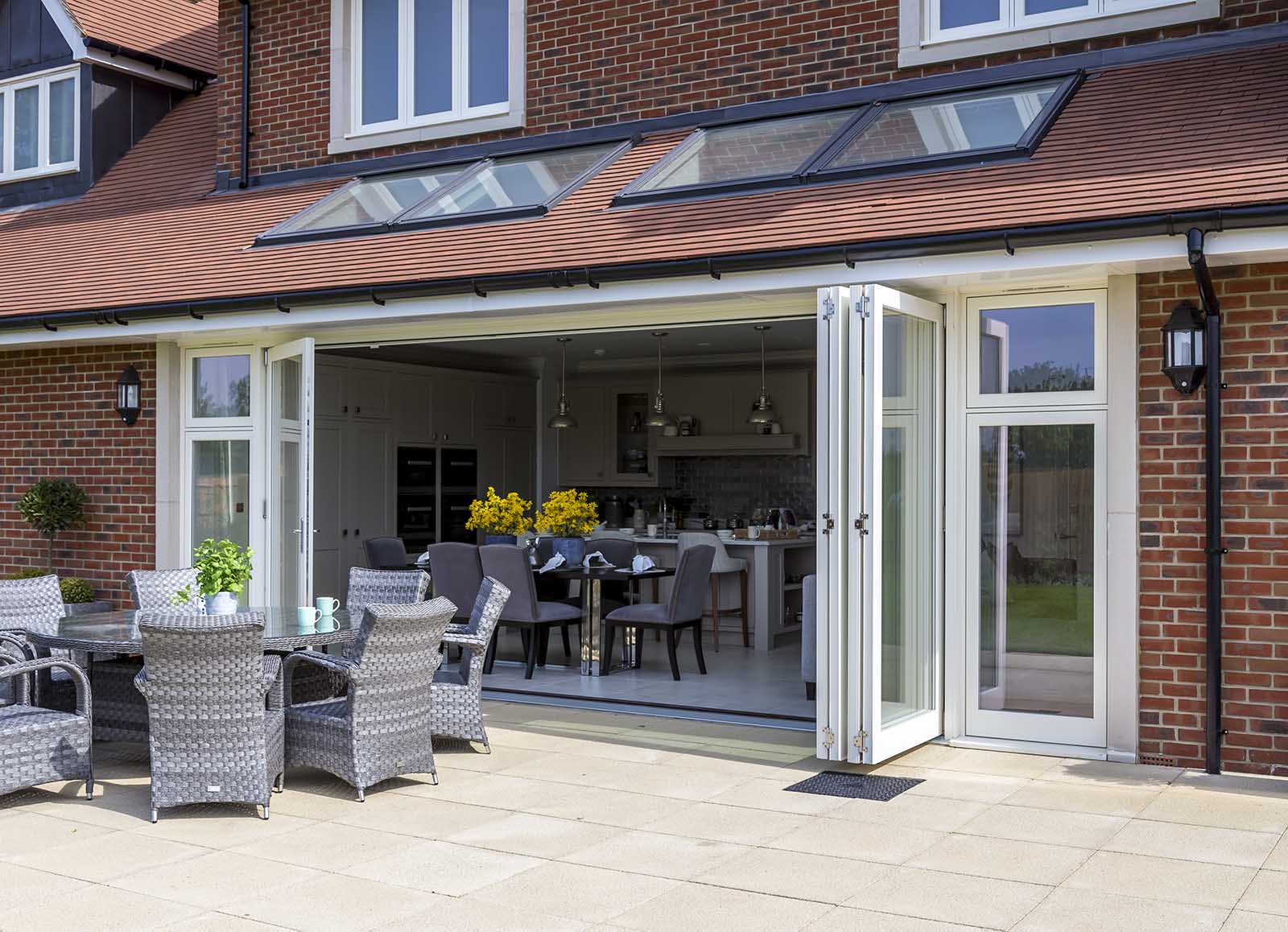
Bifold doors have become a defining feature of high-end residential architecture. They connect indoor and outdoor spaces, flood interiors with natural light and create a sense of openness that is hard to achieve any other way.
But when it comes to material choice, timber is too often overlooked in favour of aluminium. For the right project, that is a missed opportunity.
Why material choice matters in high-end residential design
When specifying external bifold doors for a premium residential project, the material decision is important to get right. It affects thermal performance, visual cohesion, long-term durability and the overall character of a building.
Aluminium bifolds dominate the mainstream market. But for design-led projects – particularly those involving traditional or heritage architecture, bespoke interiors, or clients who value natural materials – timber bifold doors deserve serious consideration.
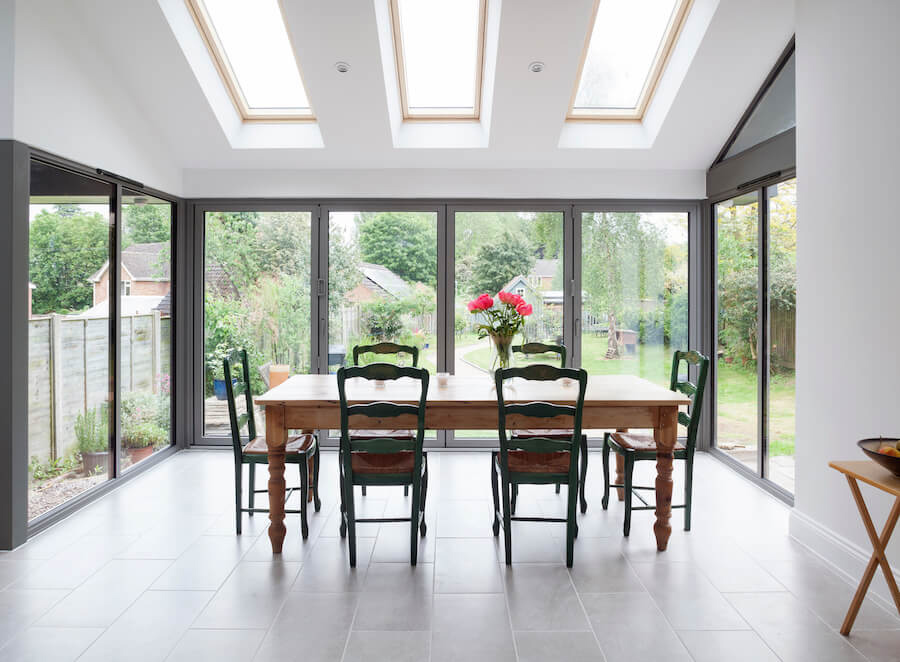
The case for timber: where wood outperforms metal
Thermal efficiency and building regulations compliance
In terms of thermal efficiency, timber frames perform exceptionally well. Wood is a natural insulator. Its cellular structure significantly reduces heat transfer compared to metal, meaning less warmth escapes through the frame itself.
At Lomax + Wood, our wooden bifold doors are factory double glazed to a 4/16/4 toughened low-e argon fill specification, achieving a U-value of 1.4 as standard – fully compliant with current building regulations (Part L). An upgrade option is available to reduce the U-value further if your project requires it.
For those working on projects where energy efficiency is a priority, timber offers a natural advantage over aluminium frames, which conduct heat far more readily without a thermal break.
Key performance facts:
- Standard U-value: 1.4 W/m²K
- Double glazing with argon fill as standard
- Full weather-stripping for thermal and acoustic performance
- CE Marked to EN 14351-1 + A1:2010
- Performance tested to BS 6375 Parts 1, 2 and 3
Visual cohesion with the rest of the building
One of the strongest arguments for specifying timber is design integrity. Where a project features timber windows, timber entrance doors or traditional French doors, introducing aluminium bifolds can create a jarring visual contrast.
Solid timber bifold doors maintain a consistent aesthetic language across the façade. The warmth and grain of natural wood complements heritage brickwork, stone and render in a way that aluminium rarely achieves.
For interior designers and architects working on open-plan schemes, wooden bifold doors also create a far more cohesive transition between interior doors, living spaces and the outside. Put simply, they look like they belong.
Bespoke design flexibility
Timber is inherently more adaptable than aluminium or steel. It can be shaped, profiled and finished to suit almost any architectural requirement.
At Lomax + Wood, every set of timber bifold doors is made to order. Design options include:
- Up to eight panels opening in either direction
- Maximum width of 16 metres (using joined track sections where required)
- Hardwood or softwood construction
- Any RAL colour or stain finish
- Ovolo glazing bars (20mm wide) for a traditional appearance
- Raised and fielded panels as an alternative to full glazing
- Curved top track and bottom channel on a timber cill section
This level of flexibility is particularly valuable on bespoke projects where standard panel sizes simply will not work.
Practical design: thresholds and clearance space
Getting the threshold right
For external bifold doors, the threshold detail is one of the most critical specification decisions. It affects both the smooth operation of the doors and the weather performance of the installation.
Timber cill sections at Lomax + Wood can be finished with a curved track and bottom channel – something that is not achievable with an aluminium cill due to its construction. This gives greater flexibility when working with uneven floor levels or when a specific architectural detail is required at the threshold.
Clearance space for bifold operation
Architects and developers should factor in adequate clearance space when planning bifold door openings. The doors need room to fold and stack when open. The number of panels, the panel sizes and the direction of opening all influence how much space is required.
Our team is experienced in working through these details at the design stage, helping to avoid costly errors on site. We offer a range of service options ranging from simple supply-only packages to full site survey and installation packages.
Security and peace of mind
Security is a non-negotiable for any external bifold installation. Lomax + Wood’s timber bifold doors are supplied factory hung with:
- Espagnolette locking with latch and mortice deadlock
- Internal key locking points (locking bolts) for additional stability
- Internally glazed construction – a genuinely secure anti-burglar configuration
- Glazing fully sealed with silicone both internally and externally
This specification gives homeowners and building occupants genuine peace of mind, knowing that their doors meet the security requirements expected of high-end residential projects.
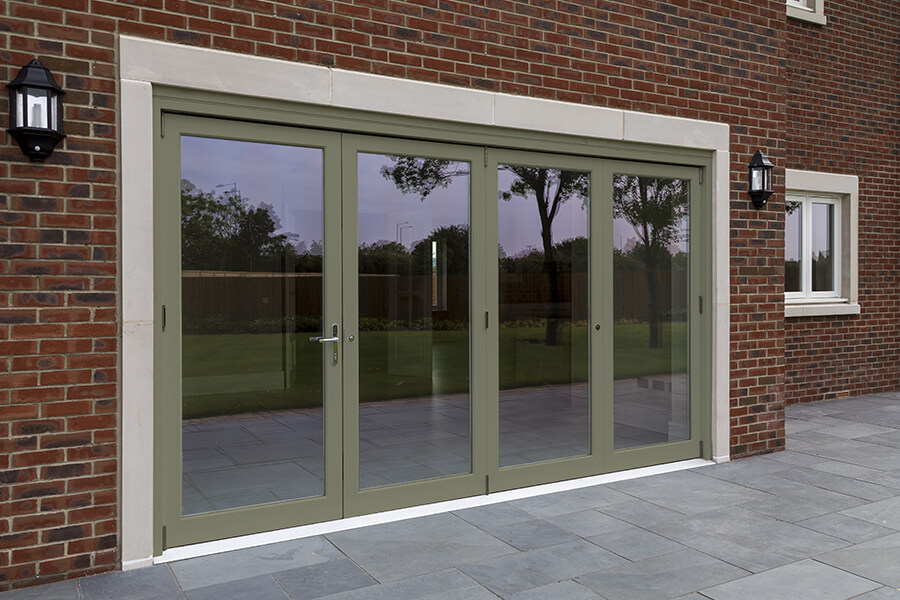
Timber vs aluminium bifolds: an honest comparison
A common concern raised by architects is that timber requires regular upkeep compared to aluminium. It is a fair point – but one that deserves context.
When comparing timber and aluminium bifold doors across the most important criteria, timber holds its own in several key areas. In terms of thermal performance, timber is a natural insulator and performs very well without the need for a thermal break, whereas aluminium requires one to achieve comparable results. For design flexibility, timber offers far greater scope for bespoke detailing, profiling and finishing. Visually, the warmth and grain of natural wood is difficult to replicate in metal.
The honest answer: timber requires more regular upkeep than aluminium, but when maintained correctly, it will stand the test of time and often outlasts aluminium in terms of visual relevance. For clients who appreciate natural materials and invest in quality, this is rarely a deterrent.
It is also worth noting that modern factory-applied finishes have dramatically reduced the lot of maintenance historically associated with timber. Today’s engineered timber products, treated and finished under controlled conditions, are far more resilient to high temperatures, direct sunlight and moisture than untreated softwoods of the past.
Sustainability and responsible sourcing
For architects and developers working on projects with sustainability credentials, material traceability matters.
At Lomax + Wood, environmental responsibility is central to our manufacturing philosophy. We source all timber used in our bespoke windows and doors with full Chain of Custody certification (FSC® or PEFC), ensuring complete traceability throughout the entire supply chain, from the forest to the finished product.
This is increasingly important for projects seeking planning approval, meeting BREEAM targets or satisfying clients who want assurance that their specification choices are ethical.
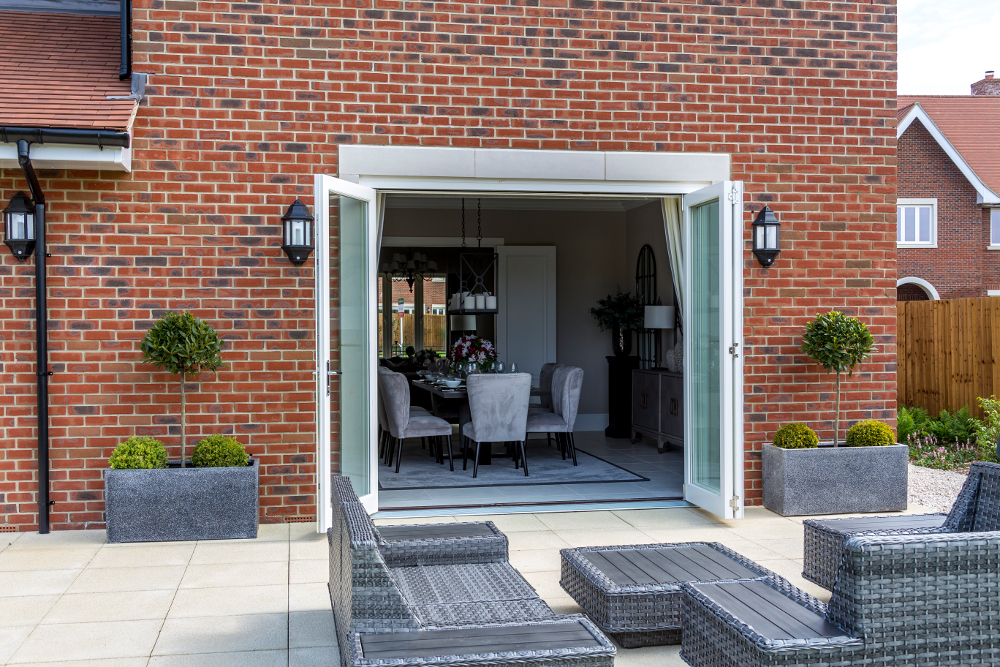
Beyond bifolds: Lomax + Wood’s full timber door range
Timber bifold doors are one part of a broader range of bespoke timber products from Lomax + Wood. Architects and developers specifying across an entire project can source:
- Traditional French doors – a classic choice for rear elevations and garden access
- Timber entrance doors – designed to make a lasting first impression
- Single timber doors – for side access, utility spaces and internal use
- Timber windows – casement, sash, flush casement, tilt-turn and more
All products are made to order, and all timber windows and doors are designed in house at Lomax + Wood’s Essex base, with supply across the UK.
Frequently asked questions
Are timber bifold doors suitable for large openings?
Yes. Lomax + Wood’s wooden bifold doors can achieve widths of up to 16 metres, with up to eight panels opening in each direction. This makes them an excellent choice for large rear extensions and garden room projects.
Do timber bifold doors work for commercial projects?
Yes. Lomax + Wood supplies to both private and commercial projects, with products specified by architects and developers across the UK.
How much natural light do timber bifold doors allow?
The large glass panels used in bifold doors allow exceptional levels of natural light into the living space. The number of panels and the proportion of glazing to frame can be adjusted to suit your project’s requirements.
Talk to Lomax + Wood about your next project
Whether you are specifying timber bifold doors for a high-end residential extension, a garden room, or a full new build, Lomax + Wood can help you find the right solution.
Get in touch with the team to request a free quote or to discuss your project requirements: Call us on 01277 353857 or complete our contact form to tell us about your project.
Our design team will work with you from specification through to installation, providing a single point of contact throughout. We look forward to hearing from you.